Exam Board: AQA
Options
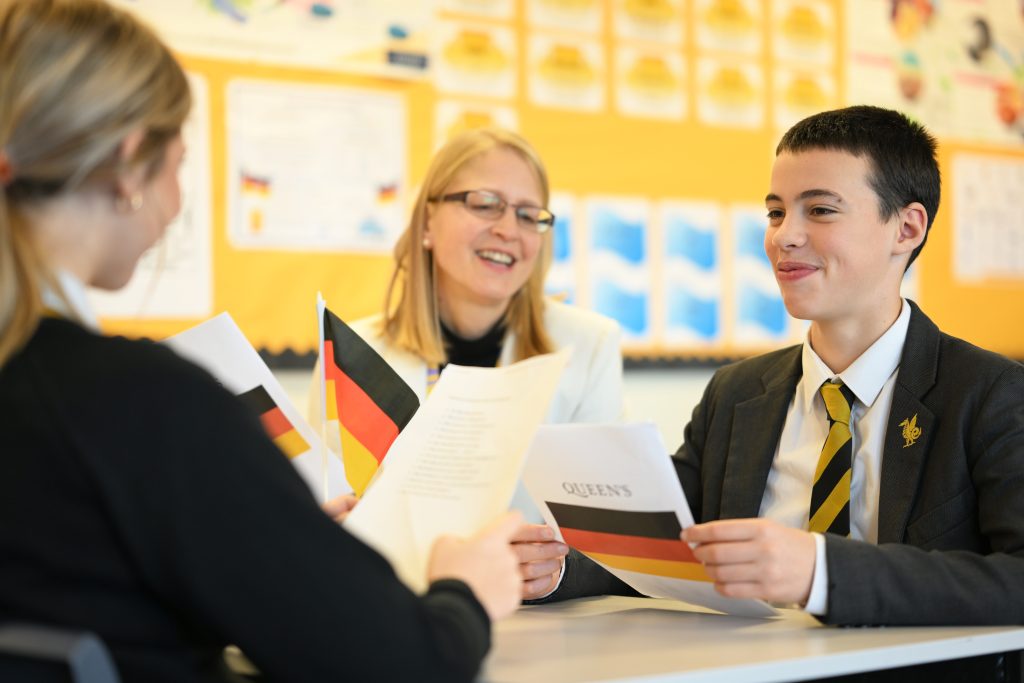
We strongly encourage all pupils to embrace the opportunity to study at least one language at GCSE, as it opens doors to exciting global opportunities and enhances valuable skills like communication and cultural understanding. At Queen’s, students can choose from
three fantastic languages: French, German, and Spanish. For those with a strong foundation in two languages from KS3, there is the option to study both, offering an even greater advantage in today’s interconnected world. Additionally, native speakers of any language are warmly encouraged to consider taking a GCSE in their mother tongue—please speak with Mrs. Webber to explore this possibility. Learning a language is a rewarding journey that will benefit you for life!
Lessons
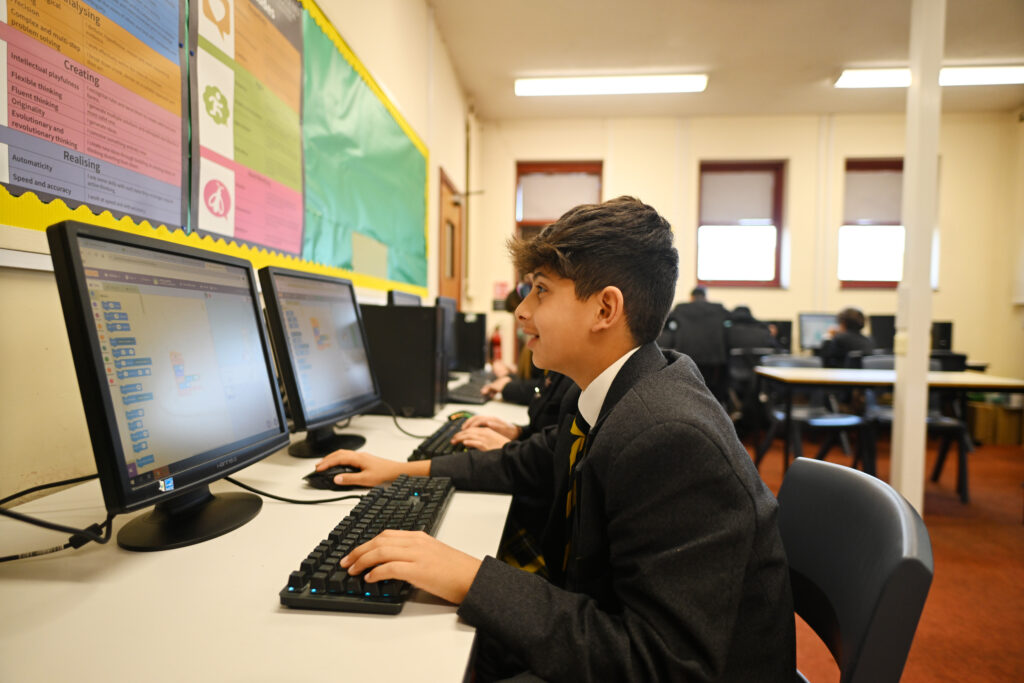
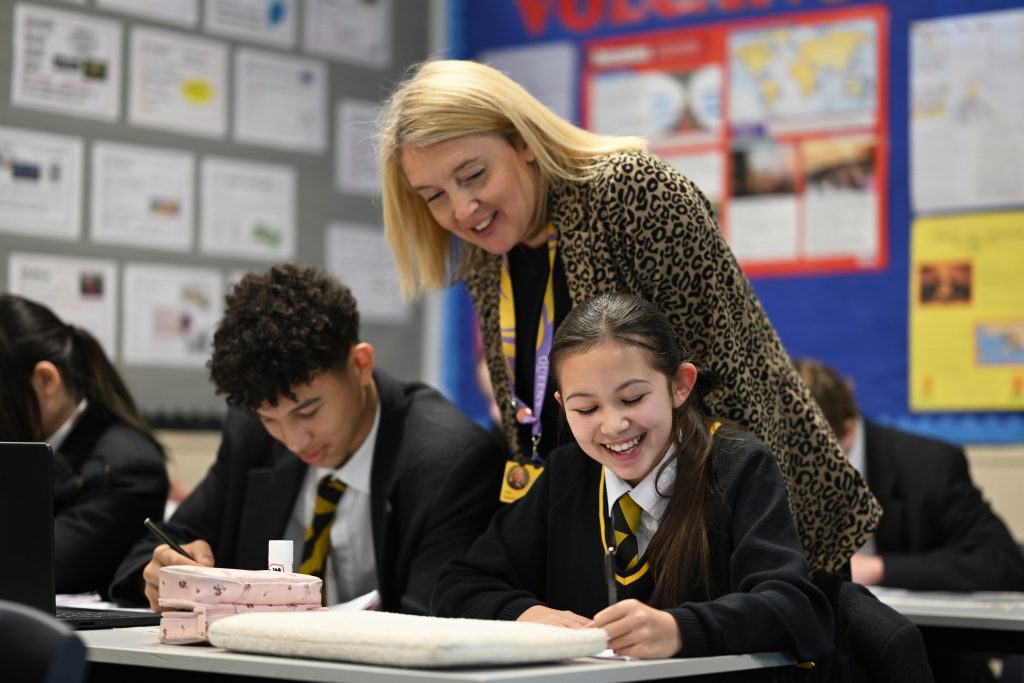
The Faculty has three purpose-built teaching rooms equipped with modern audio-visual and computing facilities. Lessons use up-to-date course books and online platforms aligned with exam specifications. While lessons feel similar to those at Key Stage 3, there is a rise in the challenges offered by comprehension tasks and pupils develop their vocabulary, fluency and accuracy. Regular use of the target language by both teachers and pupils is the Norm.
Topics
Pupils will often revisit topics which were introduced when they studied the language at Key Stage 3, such as free-time activities, holidays, school and healthy living. However, these topics are explored in greater depth and new topics are also introduced, for example relationships, celebrity culture, new technology, environmental issues
and the world of work.
Overseas Trips
There is no doubt that pupils who visit the countries whose languages they are studying come back motivated and enthusiastic to improve their language skills further. With this in mind, we organise visits to France, Germany and Spain so that our pupils can appreciate the culture, people and language first-hand.
Assessment
All skills are tested at the end of Year 11 in four separate exams: Speaking, Listening, Reading and Writing. Each skill is worth 25% of the exam. Students can be entered into Higher or Foundation tier for the language they are Studying.
For Listening and Reading, the exam questions are: true/false, positive/negative, mix and match, multiple choice, ticking boxes, along with short, written answers in English, some dictation and translation into English.
The Writing exam requires candidates to sit a paper in which they write two long paragraphs, and do a translation into the target language. The Speaking exam consists of a 10-12 minute ‘oral’ in which they do a role play, describe a photo, read a passage aloud and answer questions on topics they have studied.
Value
Studying a Modern Language isn’t just about being able to communicate when you travel abroad—it’s an investment in your future! Learning a language boosts your confidence, sharpens your understanding of your own language, and sets you apart as a candidate for top universities and exciting career paths. Employers value language skills highly, offering access to a wide range of better-paid jobs across industries like business, tourism, media, and international relations. Beyond that, languages unlock doors to new cultures and experiences, taking you to places and opportunities you might never have imagined. Choosing a language at GCSE is a step toward becoming a global citizen with a world of possibilities at your fingertips!