


Claire Davies
Director of performing Arts and Assistant Head
LinkedIn
Claire recently joined us as our New Director of Performing Arts and Assistant Head.
She is enthusiastic about constantly improving and driving creative arts at Queen’s, with nearly 20 years experience leading performing arts departments!
Performing Arts & Music
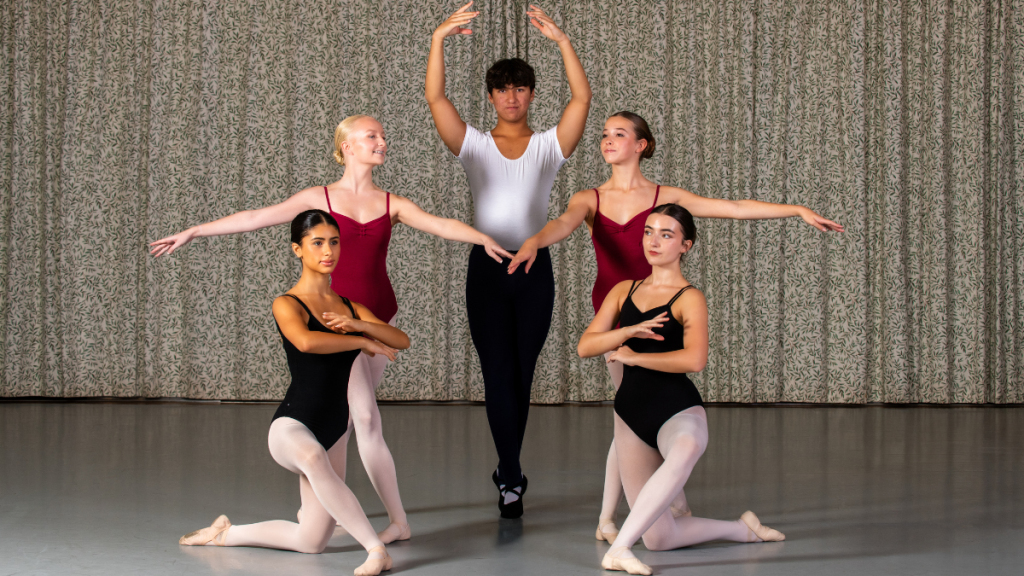
Over the first two weeks of term, I have spent time talking to our year groups about the value of their Music and Performing Arts lessons and, in particular, challenging the idea that these are subjects that are only relevant to those students who might one day want to pursue a career in the industry. Of course, for some of our students that will be exactly what they hope to do, and we should absolutely encourage and support those ambitions, but the more we talked, the more it became clear that the value of these subjects reaches far beyond the stage.
Skills
We started by thinking about the skills that students develop through their Music and Performing Arts lessons. Confidence, resilience, teamwork, reading an audience, controlling facial expressions, communicating effectively and having the ability to tell your own story were just some of the ideas that came forward. We then linked these skills to the world of work and considered what employers are really looking for when they read a CV. Politician and CEO were some of the first suggestions, but as the conversation developed, students began to realise that actually, almost every career requires some of the very skills they are developing in these classrooms.
Confidence
We talked about Marcus Rashford and his mission to support families living in poverty, considering how his ability to communicate, present himself and engage an audience has helped him to make his message so powerful. There was a real moment of recognition from the students as they began to understand that the skills developed through performing are not simply about standing on a stage; they are about having the confidence to stand up for something you believe in, to communicate your ideas and to make other people listen.
Performing Arts
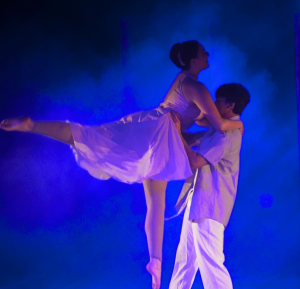
So many of our students dream of being in the spotlight, and it is wonderful that they do. There is something incredibly special about watching a young person find the confidence to perform in front of an audience, particularly when you know how much courage, resilience and preparation has gone into that moment. However, the skills learnt in a Performing Arts classroom serve us long after the applause has stopped. They are the skills that help us in an interview, in a presentation, in a meeting, when leading a team, when trying to persuade someone of an idea or simply when we need to find the confidence to use our own voice.
Music
We then turned our attention to Music, a subject that continues to thrive beyond the classroom and plays such an important part in the lives of our young people at Queen’s, yet academically, it has been missing some of that magic from the curriculum. Too often Music can become wrapped under the wider umbrella of Performing Arts, when in fact it is so much more than that and deserves to be recognised and celebrated in its own right. We talked about the links between Music and Mathematics, the way music can help us to develop different parts of our brain, the creativity and discipline involved in learning an instrument and, perhaps most importantly, the joy that music can bring both to ourselves and to others.
This is why we are so committed to bringing academic Music back into the classroom. It was particularly lovely, moments later, to hear Mrs Charles delivering a lesson framed around Kate Bush, because the conversation that followed was exactly what we want for our students: curiosity, creativity, challenge and a genuine sense of connection with the world around them. These are the moments that remind us why subjects such as Music matter so much.
Music and Performing Arts are not an optional extra, even though they can most certainly be treated as one. If we see them simply as subjects for students who want to perform, we risk overlooking all of the additional benefits they bring. We risk missing the confidence that develops when a student steps outside their comfort zone, the resilience that comes from rehearsing something again and again, the teamwork required to create something together, the creativity that allows a young person to see something differently and the sense of identity that comes from discovering that you have something worth saying.
Our Ethos and Goals
At Queen’s, we want our students to leave us with strong academic foundations, but we also want them to leave with the ability to communicate, collaborate, lead, adapt, create and connect with others. We want them to have the confidence to walk into a room and make their voice heard, the resilience to keep going when things do not go to plan and the creativity to find a different way forward. These are not skills that belong to one particular career or one particular pathway; they are skills for life.
That is why Music and Performing Arts matter. They may begin in a classroom, on a stage or in a rehearsal room, but what our students learn there has the potential to stay with them for the rest of their lives. The stage may be where some of them eventually find their future, but for all of them, the skills they develop will help them to find their place in the world beyond it.
Written by Claire Davies, Director of Performing Arts and Assistant Head